The End of Managed Markets With Uniswap
The Moment Market Became Autonomous
Every financial system before Uniswap relied on one assumption that wasn’t questioned until they showed up.
Crypto Market needs managers.
Someone to decide what trades were allowed, who could participate, how liquidity was provided, and when rules, negotiations are applied.
Even so called decentralized systems before Uniswap kept this structure intact, they tried distributing responsibility, but failed to remove strict authority, the role stayed.
Uniswap on the other hand did not distribute the manager, It removed the position entirely. What they replaced it with was not just governance, coordination, or oversight, it was a logicautomation of the market.
This change proved to matter more than any feature previous Protocols could have done. Because by removing the managers, they change the nature of the market itself.
Markets Before Uniswap
Historically, markets were like places, then they became platforms, then they became services for every participants.
But in every form, someone operated them.
Order books required coordination, liquidity required incentives, settlement required trust, even electronic markets depended on institutions to reconcile outcomes and absorb risks.
The Previous Protocols did not eliminate this but only narrowed the circle. Uniswap team crossed a different boundary, they treated markets as something that could exist without a strict supervision.
What Is Uniswap?
Uniswap is a set of smart contracts that implement exchange logic directly on a blockchain.
It doesn’t just run a marketplace, it exposes a new rule set that says no super operator deciding which assets are listed, no intermediary holding funds, no authority approving participation.
The contracts are deployed and left alone and can interact with them.
The Design Mechanism
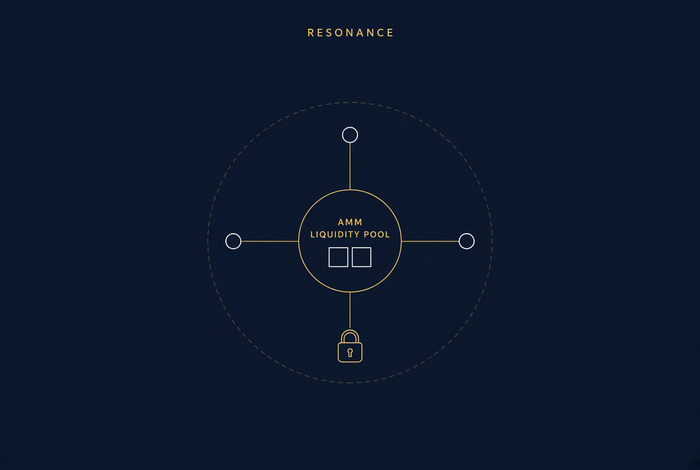
Uniswap replaced order books with pools.
Liquidity providers deposit pairs of assets, traders swap directly against those pools and prices adjusted according to a pre-set mathematical rules.
The invariant is simple: x times y equals k.
As one asset leaves the pool, the price changes automatically, no negotiation, no intervention.
This is not just a model of coordination, but a model of inevitability in the crypto market
Before Uniswap, markets required interpretation. Orders had to be matched, prices had to be mechanically discovered through interaction, settlements were delayed.
Uniswap removed this interpretation entirely.
The outcome of a trade is determined the moment it is submitted. If the transaction executes, settlement is final. If it fails, nothing changes.
There is no intermediate state and this was the key shift.
Each version of Uniswap refined execution without introducing authority.
The early version enabled basic swaps, later versions added direct token pairs and flash swaps. Version three introduced concentrated liquidity but none of these changes reintroduced management.
The system became more precise, not more governed.
Why It Spread
Uniswap did not grow because it was promoted, it grew because it removed friction from Cryptocurrency trading .
Developers could rely on it as infrastructure, users could interact without permission, liquidity could appear wherever demand existed. Once the logic was public, everything else became composable.
Other protocols did not integrate Uniswap because they were told to do so, they integrated because they needed no permissions.
The Costs of Autonomy In The New System
Autonomous systems are not immune to attacks.
Uniswap exposes users to MEV, liquidity providers face complexity and competition, malicious forks can copy the code instantly and some governance remains unresolved in places.
These are not bugs but consequence of a new market system.
What Actually Changed
Uniswap did not just optimize trading, it changed what markets are. Liquidity became programmable, access became permission-less, settlements became native.
Markets stopped being services and became infrastructure, an irreversible shift in the crypto market.
Resonance Conclusion
Uniswap is not important because of volume or dominance, it is important because it demonstrated that markets do not need operators.
What they need is a set of mathematical rules and once those rules are executable, markets can exist without anyone running them.
That is the moment markets stopped being managed and started being autonomous.
Stay with the work
Resonance Nova publishes long-form essays on crypto systems, digital culture, and networked identity.
If this piece was useful, you can follow the publication here:
Continue exploring
Follow the idea further.
Explore more reporting and analysis from across the Resonance archive.
Continue reading
Recommended from the archive
The SEC Opened Path for Onchain Stock AMMs After Clarity Act Failure.
Here’s What Changed.
Read article
LAST WEEK IN CRYPTO
Bitcoin Squeezes to $81K Then Gets Marked Down by Jackson Hole, Solana Passes Its First Binding Governance Vote, and a Cronos Oracle Attack Forces a Chain Halt
Read article
Last Week in Crypto: BlackRock, DTCC, and Mastercard Just Became Circle’s Validators
Plus: stablecoin float keeps shrinking even as usage hits record highs, CLARITY Act stalls again, and the Coldcard damage total keeps climbing.
Read article