LAST WEEK IN CRYPTO
Bitcoin Squeezes to $81K Then Gets Marked Down by Jackson Hole, Solana Passes Its First Binding Governance Vote, and a Cronos Oracle Attack Forces a Chain Halt
RESONANCE WEEKLY CRYPTO PULSE
KEY TAKEAWAYS
Bitcoin ran from the low $60,000s to a brief print near $81,000-$81,455, its highest since mid-May, then gave most of it back to settle near $78,000 after Fed Chair Kevin Warsh’s hawkish Jackson Hole debut.
Weekly gain landed around 22-24%, the strongest week in roughly two years.
Solana held its first binding onchain governance vote.
The constitution passed easily; a proposal doubling annual disinflation from 15% to 30% scraped through by 0.33 points over the two-thirds bar after late flips from Kraken and Galaxy; a heavier fee-burn proposal failed.
Tectonic on Cronos lost an estimated $74-75 million to oracle manipulation of an illiquid token, the week’s largest hack by far, and forced Cronos to halt the entire chain while validators weigh a rollback against a blacklist.
Cosmos Labs disclosed that a bug reported through its own bug bounty in April was misjudged as safe and used to drain $5.7 million across six chains the same week the real patch shipped.
US spot Bitcoin ETFs strung together 8-9 sessions and $2.8-3 billion of inflows before roughly $200 million of outflows on August 28 broke the streak, tracking toward the strongest ETF month of 2026.
MARKET STATE
The rally was mechanical before it was sentiment-driven.
Billions in short positions were liquidated into the breakout, spot Bitcoin ETFs took in $1.92 billion through August 21 and kept buying into midweek, and the
Treasury’s expansion of long-duration bond buybacks toward $4 billion per operation pulled long yields down and loosened financial conditions generally.
ETH ran roughly 30%, SOL roughly 28%, XRP roughly 48% over the seven-day window that captured the squeeze.
Total crypto market cap added on the order of $400-430 billion, holding near $2.7 trillion.
Then Warsh reversed it in a day.
His first Jackson Hole keynote as Fed chair called 2% inflation a “firm, fixed target,” said forward guidance had “overstayed its welcome,” and flagged PCE still running around 3.7%.
September hike odds jumped from 35% toward 56-57%. Bitcoin dropped 3% through $78,000, and $488 million in mostly long positions got liquidated, with a $6.4 billion BTC options expiry adding noise on top.
Institutions bought the rally, then marked it to a rate-hike scare.
Bitcoin’s structure improved, it’s back above its long moving averages, but Friday made clear the bid is still Fed-sensitive.
SOLANA’S FIRST BINDING GOVERNANCE VOTE
Three Solana Governance Proposals went to validators this week, the network’s first binding onchain vote of any kind.
SGP-0001, a constitution, passed easily at roughly 86%.
SGP-0003, a heavier fee-burn proposal, failed at roughly 54%.
The contested one was SGP-0002: doubling annual disinflation from 15% to 30%.
It needed two-thirds support and cleared by just 0.33 points, after Kraken and Galaxy flipped their votes late.
If it activates, it pulls the 1.5% terminal inflation floor forward from roughly 2032 to roughly H1 2029 and cuts projected six-year issuance by about 18.9 million SOL.
It isn’t live. The vote only authorizes the change; SIMD code activation still has to happen separately, and staking yields will compress once it does.
Participation hit roughly 61% of eligible stake, historically high for Solana.
The mechanism worth flagging: a monetary policy change that almost failed by a fraction of a point is a very different governance story than the headline “Solana cuts emissions” suggests, and implementation is still the thing that matters, not the vote itself.
TECTONIC ORACLE ATTACK FORCES A CRONOS HALT
An attacker manipulated the price oracle for TONIC, an illiquid token on Cronos-based lending protocol Tectonic, then borrowed against the artificially inflated collateral in a Mango-style attack.
Estimated losses run $74-75 million, making it the week’s largest incident by a wide margin.
Only about $6 million made it across the bridge to Ethereum; most of the stolen funds are stuck on Cronos itself, because Cronos halted the entire chain in response.
Crypto.com’s exchange and app say they’re unaffected.
Validators now face a genuine precedent fight: roll the chain back, blacklist the attacker’s addresses, or restart from a clean state.
Whichever they choose sets the template for how Cronos, and potentially other chains watching, handles the next illiquid-oracle attack.
REGULATORY
Jackson Hole was the week’s real regulatory event in terms of market impact, but on crypto policy specifically: the CLARITY Act slipped again toward September even as banks kept building around it.
The SEC floated its “Regulation Crypto Assets” offering exemptions while separately charging entities over fake US-adviser filings.
Kalshi took two legal hits, a Ninth Circuit ruling touching state power over prediction markets and a separate Connecticut suit, while also landing exclusive prediction-market partner status for the US Open.
California’s AB 2409, banning public officials from launching meme coins, passed both chambers and awaits the governor’s signature.
A Trump-linked GOLD token crashed roughly 95% within hours of launch.
International regulatory moves:
Pakistan’s licensing deadline lands September 5.
The UK directed the Bank of England on stablecoins.
Japan is moving toward instant onchain settlement for stocks and bonds.
Thailand is advancing spot BTC/ETH ETF rules.
Standard Chartered became the first bank to distribute an HKD stablecoin.
SBI took a $270 million, 20% stake in Indonesia’s Ajaib to push a yen stablecoin.
The BIS reiterated that it doesn’t think stablecoins are ready for payments at scale, favoring tokenized deposits instead.
SECURITY
Tectonic (Cronos), ~$74-75M: Oracle manipulation of illiquid TONIC, then borrowing against the inflated collateral. Cronos halted the entire chain in response.
Term Finance, ~$8.5M: Cheap vote accumulation on thin vault governance, then a drain of roughly 2,843 ETH and 1.68 million USDC.
Cosmos Labs, $5.7M across six chains: A bug reported through the company’s own bug bounty in April was misjudged as safe, then exploited the same week the real fix finally shipped.
Fogo L1, ~400M FOGO (roughly 10% of circulating supply): Mainnet halted in response.
Crypto-card hack, $1.1M: Crushed the affected neobank’s token roughly 49%.
Also, 10-year-dormant BTC wallets moved $40M this week, unrelated to any of the above but worth a line if you want it noted.
DeFi TVL popped with the rally to around $93 billion midweek before easing back.
The throughline across four of five incidents: governance-thin voting, stale oracle pricing, and misjudged bug triage, not classic contract bugs.
Security is still functioning as a tax on growth, not a solved problem the rally outran.
ECOSYSTEM REPORTS
Solana: First binding governance vote (above), plus Schwab confirming plans to add SOL, AVAX, and LINK to retail trading, and Bitwise’s Solana ETF becoming the first SOL product to reach $1 billion AUM.
XRP/Ripple: XRPL’s quantum roadmap came back into focus, a multi-stage plan toward roughly 2028.
Ripple-backed Evernorth cleared an SEC S-4, with a Nasdaq vote on the XRP treasury merger set for September 30.
XRP was the best-performing major on the squeeze, up roughly 48%.
Bitcoin: StarkWare mined what it’s calling the first quantum-safe Bitcoin transaction on mainnet, August 26, block ~964,199, using Avihu Levy’s QSB construction.
Hash-based, no soft fork required, but nonstandard enough that it had to route through MARA Slipstream.
Small (10k sats) and expensive to construct (hours of GPU time, $150-200), it’s a proof of concept, not a network-wide fix.
Tokenization: Coinbase launched tokenized stocks on Base, tokenized stock volume was reported up hundreds of percent month-on-month, Stellar RWAs were cited near $4 billion, and Bybit launched 24/7 options on SpaceX and Nvidia stock perps.
INSTITUTIONAL & CORPORATE MOVES
Strategy raised $2 billion via stock sales plus a new USD cash pool, with Saylor hinting at his first BTC purchase in two months.
Bitmine bought roughly $81 million of ETH, its largest weekly haul since early July. Strive added 1,100 BTC (~$85 million).
BitGo agreed to buy NYDIG’s institutional trading arm for $42.5 million in cash and stock plus a $15 million earnout.
Coinbase expanded BTC-backed mortgages. Circle’s USDC will appear on Chelsea’s Premier League jersey starting 2026/27.
Visa deepened its Korea stablecoin partnership with Dunamu/Upbit. Bullish backed USD.AI with $100 million for GPU-collateralized loans.
A roughly $723 million HYPE unlock (4.46% of supply) sat on the calendar as the token pulled back with rate-hike bets.
Stablecoin market cap drifted up to roughly $304.5 billion, with USDC’s share ticking up against USDT.
WHAT WE’RE WATCHING NEXT WEEK
Whether Cronos rolls back, blacklists, or restarts after the Tectonic attack, a decision that sets precedent for how chains handle illiquid-oracle exploits going forward.
Whether SGP-0002’s SIMD code activation follows the vote smoothly, and what a scraped-through two-thirds margin means for Solana’s governance legitimacy on future contested votes.
CLARITY Act timing into September, the Evernorth Nasdaq vote on September 30, where September hike odds settle after Warsh, and Pakistan’s September 5 licensing deadline.
Continue exploring
Follow the idea further.
Explore more reporting and analysis from across the Resonance archive.
Continue reading
Recommended from the archive
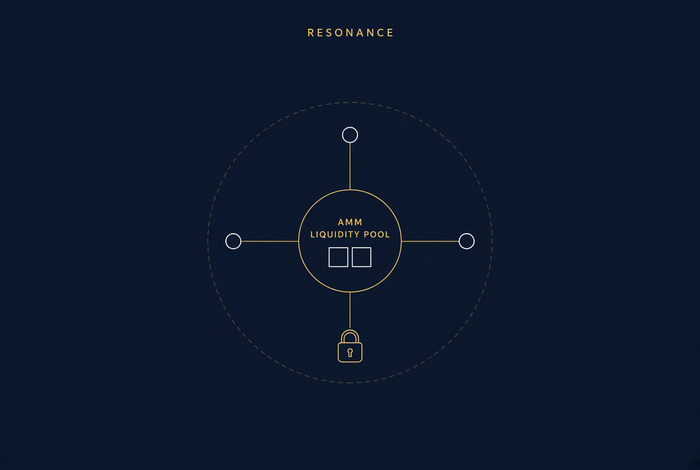
The SEC Opened Path for Onchain Stock AMMs After Clarity Act Failure.
Here’s What Changed.
Read article
Last Week in Crypto: BlackRock, DTCC, and Mastercard Just Became Circle’s Validators
Plus: stablecoin float keeps shrinking even as usage hits record highs, CLARITY Act stalls again, and the Coldcard damage total keeps climbing.
Read article
CLARITY ACT
What It Actually Does, and Why It Hasn’t Passed Yet
Read article